/ Method
Before structuting,
we need to understand.
Every company develops its own way of organising responsibilities, processes, information, performance and knowledge. When the business changes, that structure may no longer support its needs. We therefore begin by understanding how the organisation actually operates and identifying the gaps, dependencies and priorities that require attention.
From understanding to evolution.
We work through three phases that transform an understanding of the current reality into clear priorities, implemented structure and continuous improvement.




— I. Diagnosis & Prioritisation
Understand before structuring.
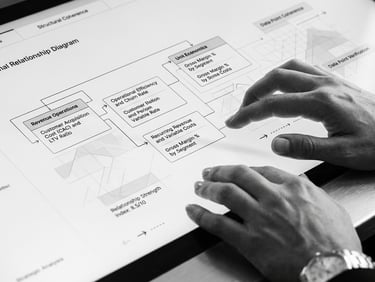
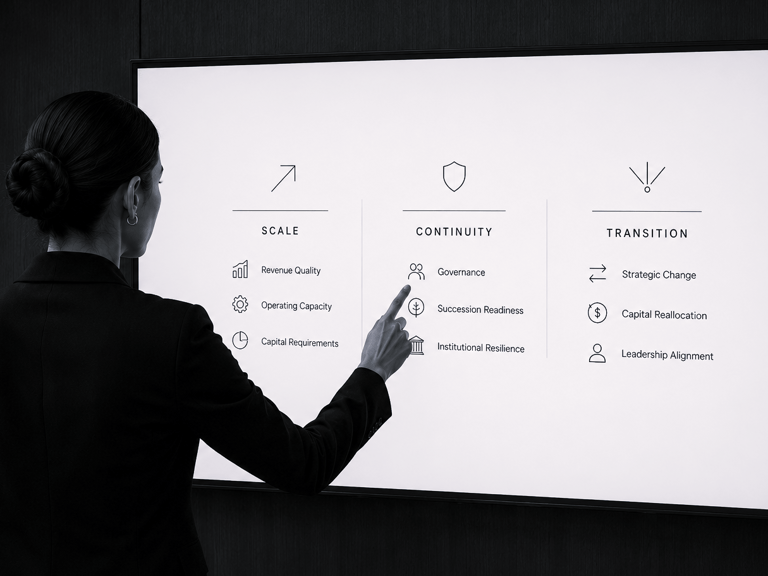
Every effective structure begins with an understanding of the organisation. We analyse responsibilities, processes, information, performance and knowledge to identify gaps and dependencies. The result is an Organisational Diagnostic and an Implementation Roadmap, defining what should be addressed first and why.
— II. Structuring & Implementation
Turn priorities into structure.
Once priorities are defined, we transform the diagnostic into structure. We organise responsibilities, processes, information, performance indicators and critical knowledge to establish a coherent management foundation aligned with the company’s reality, tested and documented.
— III. Follow-up & Continuous Improvement
Make the structure keep pace with the business.
A management structure must evolve with the organisation. We monitor performance, review processes and priorities, and identify new areas requiring attention to keep management aligned with the company’s evolving reality.
The diagnostic establishes not only what needs to be structured,
but the order in which that structure should be built.
How responsibilities, roles and relationships are defined to provide clarity for operations and decision-making.
Organisation
Performance
How information and performance indicators are used to monitor results, identify deviations and guide action.
Knowledge
How processes, decisions and critical knowledge are preserved to reduce dependencies and support organisational continuity.