/ Methodology
Efficiency can be engineered. Longevity must be designed.
The Coherence Framework™ was developed around a simple observation. As organisations grow, complexity expands across capital, operations, governance, and leadership. Sustainable performance depends not only on growth itself, but on the ability to preserve coherence as these dimensions evolve over time. The purpose of the method is to help organisations strengthen their capacity to create value, navigate change, and endure across successive stages of development.
Organisational longevity emerges when capital, operations, and governance evolve in coherence.
How resources are allocated to support resilience, optionality, and long-term objectives.
Capital
Operations
How value is created through people, systems, processes, and execution.
Governance
How decisions, accountability, and institutional knowledge endure over time.
From visibility to execution.
The Coherence Framework™ is implemented through three stages designed to establish clarity, define direction, and support long-term decision-making.
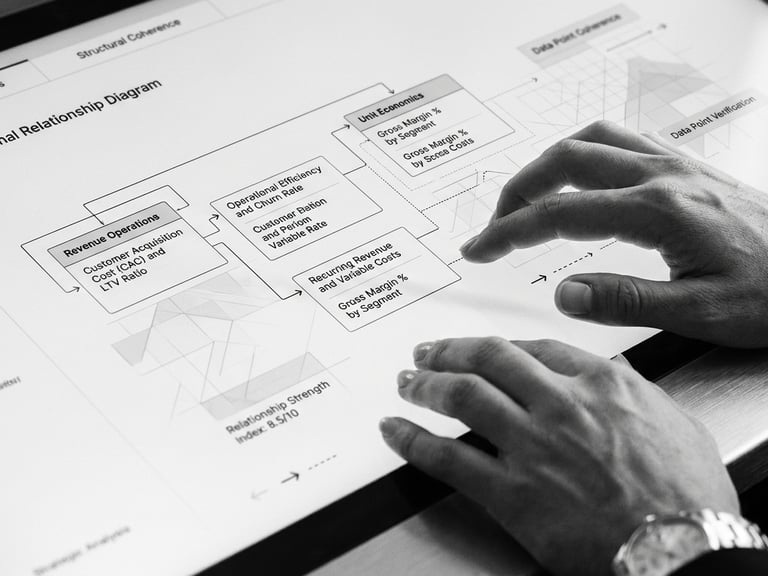
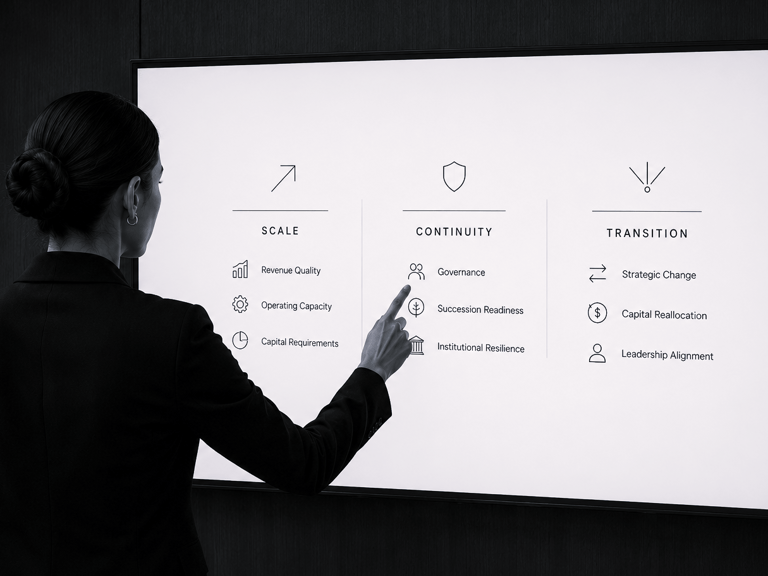


— I. Audit
Revenue Architecture & Operational Capacity
Before strategy can be refined, the current reality must be understood. This phase establishes visibility across revenue performance, operating capacity, and organizational economics to identify the constraints that shape future decisions.
— II. Assessment
Strategic Finance & Accretive Decisions
Once structural visibility is established, we evaluate strategic alternatives, capital deployment priorities, and organizational readiness to determine which path best supports long-term value creation.
— III. Advisory
Strategic Partnership & Long-Term Stewardship
We remain engaged as a long-term strategic partner, helping leadership navigate capital allocation, organizational evolution, and key decisions while preserving coherence across changing stages of growth.
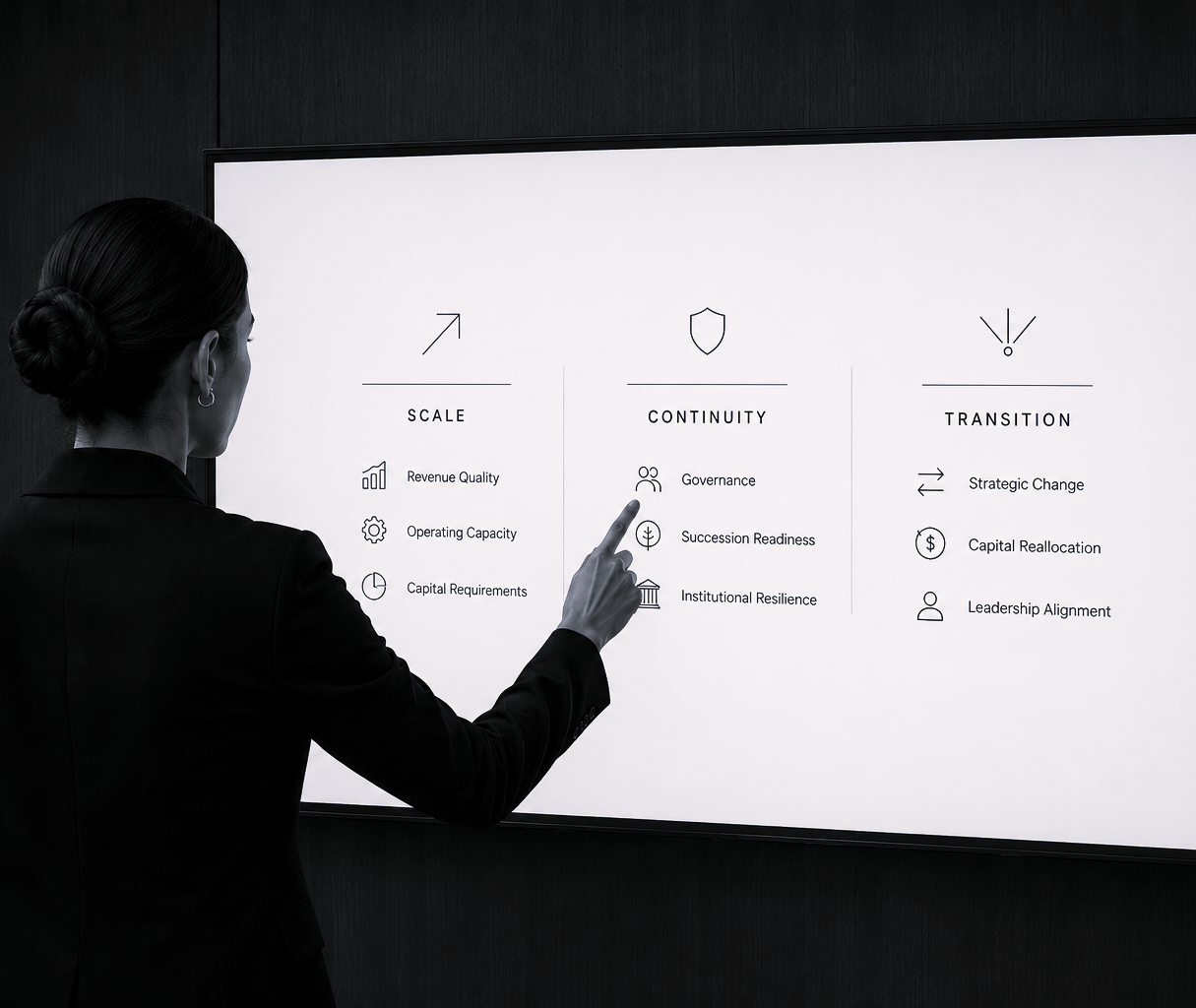
Businesses endure when structure evolves before complexity does.
Long-term resilience depends on the deliberate alignment of capital, operations, and governance. The earlier this coherence is established, the greater the organisation's capacity to navigate growth, continuity, and transition without compromising its future.